Expect more attacks against oil pipelines
 Tom KirkmanIndependent Project Manager
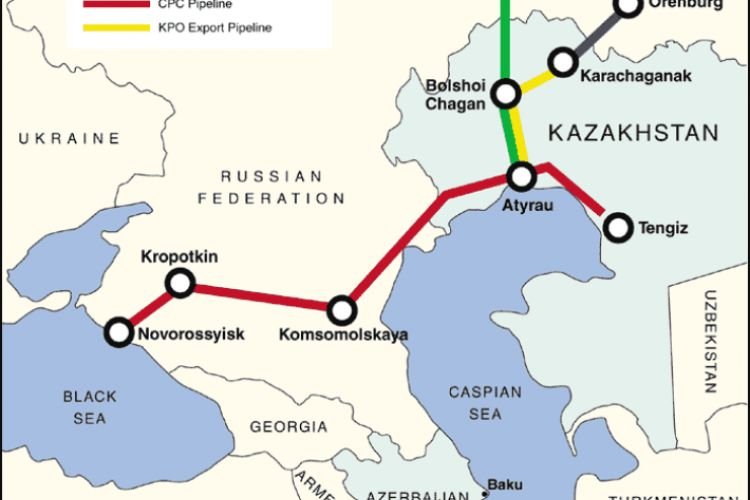
Expect more such attacks against oil pipelines.
.
Reposted from Djoomart Otorbaev
Drone Attack on #Oil #Pipeline Transporting #Kazakh Oil to World Markets.
The primary shareholders of this international pipeline are #Russia and #Kazakhstan, as well as a number of #American and #European companies.
In this respect several questions emerge.
Is the attack Ukraine’s reaction to the discussions that have commenced between the US and Russia? Why was specific international oil pipeline targeted when numerous purely Russian oil pipelines exist on its territory? Furthermore, what relevance does this have to Kazakhstan, which has not shown support for Russia’s actions in Ukraine, but will lose a significant portion of its income?
It has come to light that on 17 February 2025, Ukrainian drones targeted the Kropotkin oil pumping station, located in the Kavkazsky District of Kuban, and owned by the Caspian Pipeline Consortium (CPC). The station is the largest oil pump station on Russian territory.
The CPC report states that: “The terrorist strike was delivered using seven unmanned aerial vehicles loaded in addition to explosives with shrapnel. The attack was timed, aiming to not only disrupt the service of the facility, but also cause casualties among the station’s operations personnel [Open link ↗].”
Due to the activation of the backup pumping scheme, which bypassed the Kropotkin pumping station, the pumping volume decreased compared to the level before the attack. “According to CPC specialists, the consequences of this blow will be eliminated within 1.5-2 months, which could lead to a decrease in the volume of oil pumped from Kazakhstan by about 30 percent,” the company’s press service reported [Open link ↗].
The Tengiz – Novorossiysk pipeline stretches 1,511 km in length. This route carries over two-thirds of Kazakhstan’s export oil and crude oil from Russian fields, including those in the Caspian Region. Currently, the CPC can transport approximately 72.5 million tonnes of oil per year from Kazakhstan and up to 83 million tonnes annually through Russia. In 2024, the CPC transported 63.01 million tonnes of oil through the system.
CPC shareholders are the Russian Federation – 24% of shares, JSC NC KazMunayGas (Kazakhstan) – 19%; Chevron Caspian Pipeline Consortium Company (USA) – 15%; LUKOIL International GmbH (Russia) – 12.5%; Mobil Caspian Pipeline Company (USA) – 7.5%; Rosneft-Shell Caspian Ventures Limited (Russia and Great Britain) – 7.5%; Eni International N.A. N.V. S.ar.l. (Italy) – 2%; BG Overseas Holdings Limited (Great Britain) – 2%; Oryx Caspian Pipeline LLC – 1.75%; Kazakhstan Pipeline Ventures LLC – 1.75%.