Mostly true, but avoid legumes and eat more red meat
 Tom KirkmanIndependent Project Manager
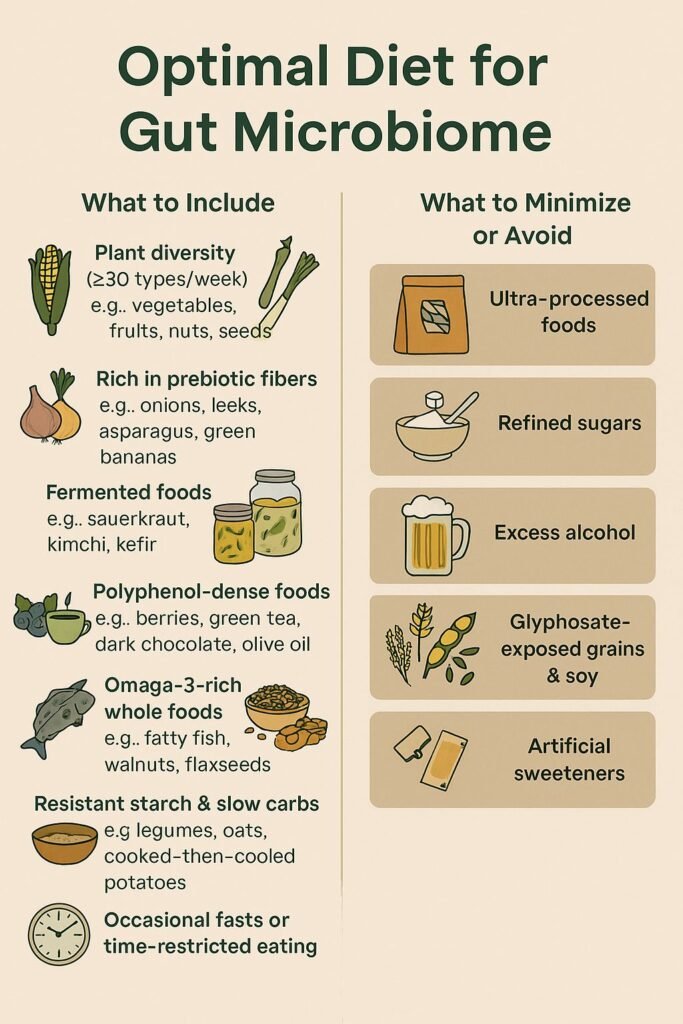
Mostly true.
Except the bit about legumes (better to avoid legumes, they tend to block nutrient absorption).
And add in lots of meat. Specifically, *red* meat.
.
Reposted from Claire Campbell MBBS FRACS(Vasc) GAICD IFMCP
🦠 The Ideal Diet to Optimise Your Gut Microbiome
A diverse, resilient gut microbiome is a cornerstone of physical and mental health. This evidence-based guide outlines the dietary pattern most consistently shown to support microbial diversity, short-chain fatty acid (SCFA) production, and a strong gut-brain barrier.
🌿 The 7 Pillars of a Microbiome-Supporting Diet
• • 1. Plant-Diverse, Polyphenol-Rich Foundation
Aim for ≥30 different plant foods per week to support a wide range of gut microbes. Minimise glyphosate exposure.• • 2. Rich in Prebiotic Fibres
Onions, garlic, leeks, asparagus, legumes, and oats feed beneficial bacteria.• • 3. Fermented Foods (Daily)
Include sauerkraut, kefir, kimchi, miso, and yoghurt with live cultures.• • 4. Polyphenol-Dense Foods
Berries, olive oil, green tea, dark chocolate, and turmeric modulate gut flora.• • 5. Omega-3-Rich Whole Foods
Fatty fish, flaxseeds, walnuts reduce inflammation and support gut lining.• • 6. Resistant Starch & Slow Carbs
Cooked-then-cooled potatoes/rice, legumes, and oats feed producers.• • 7. Occasional Fasting or Reset Days
Intermittent fasting promotes microbial resilience and gut lining repair.🚫 Foods That Harm the Microbiome
Ultra-processed foods (UPFs)
Contain additives that disrupt microbes and mucosa.Refined sugars
Feed pathogenic species and suppress beneficial bacteria.Excess alcohol
Increases permeability and lowers diversity.Glyphosate-exposed grains and soy
Act as antimicrobials, reducing diversity.Artificial sweeteners
Linked to dysbiosis and glucose intolerance.🧠 Summary: Your Microbiome-Optimising Plate
✅ Variety + 🌱 Fibre + 🧬 Ferments + 🍫 Polyphenols + 🐟 Anti-inflammatory fats
= ✨ Greater microbial resilience, diversity, and metabolic health.